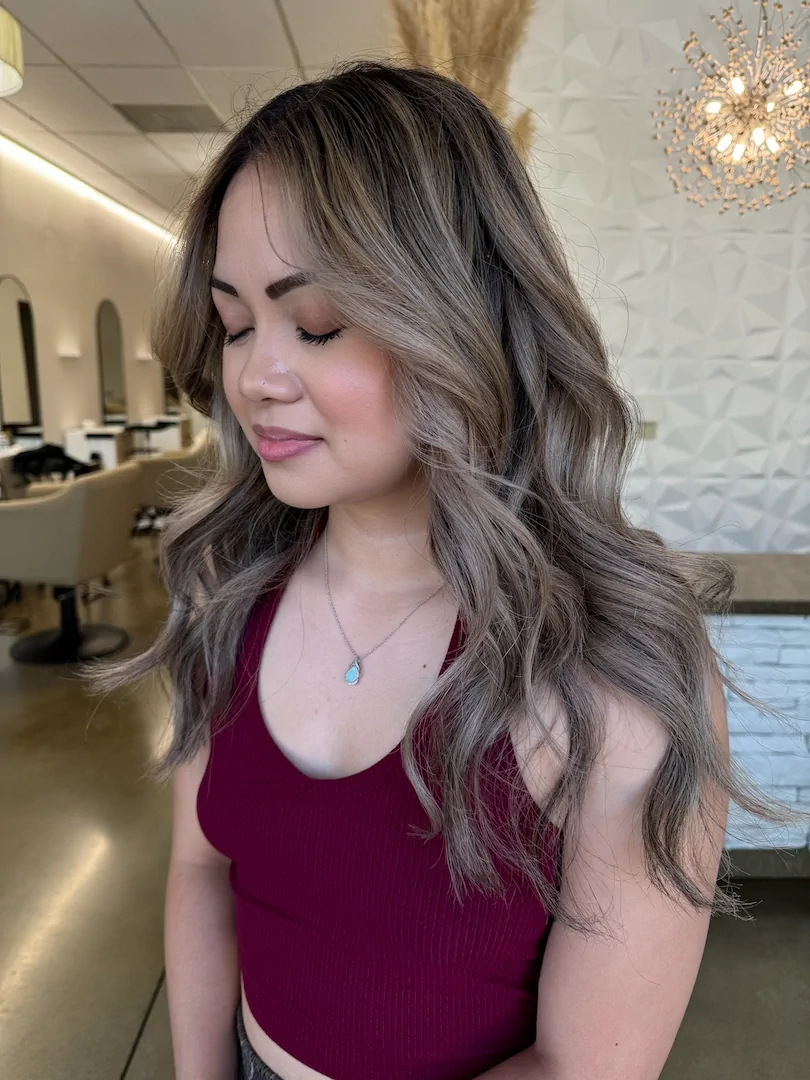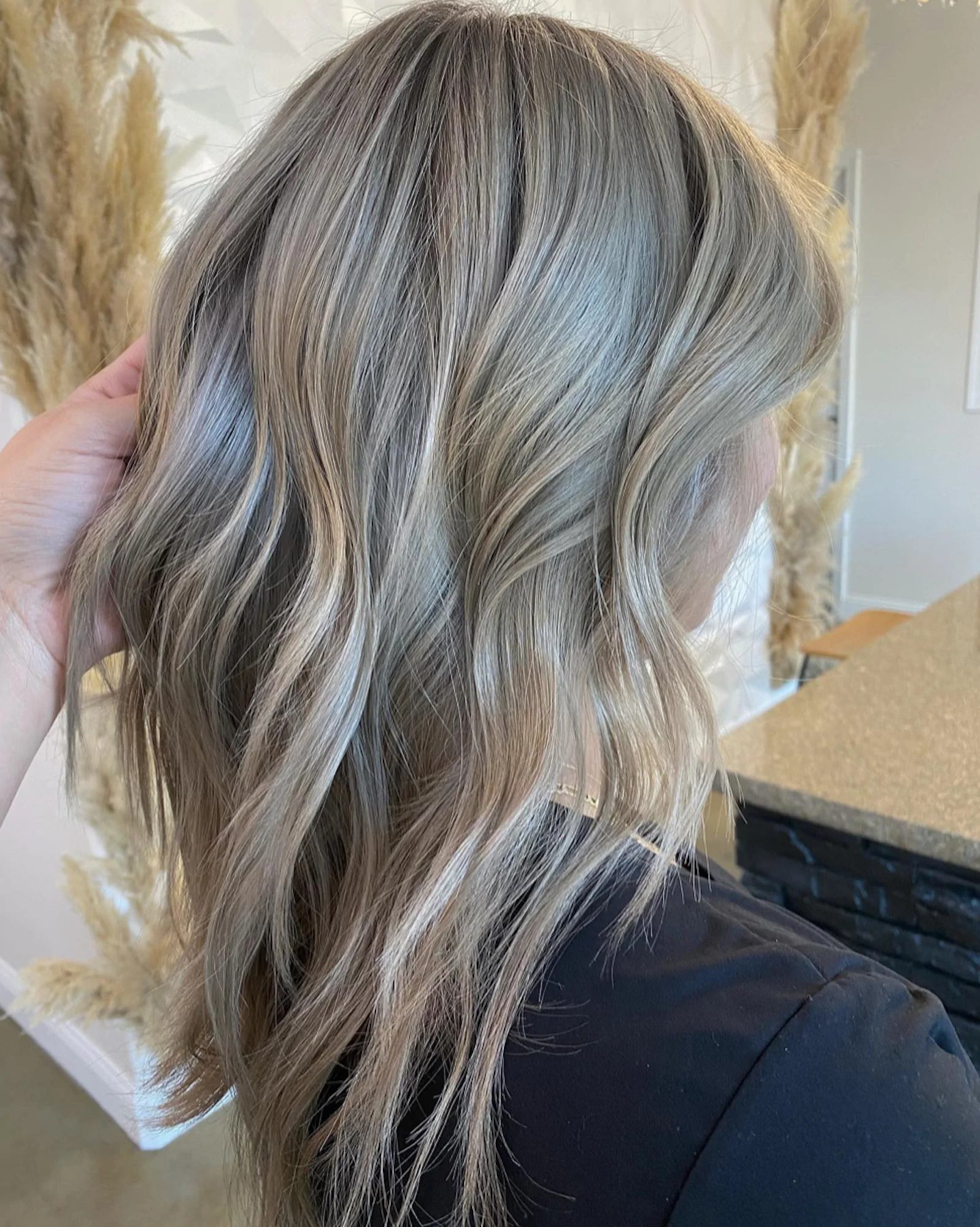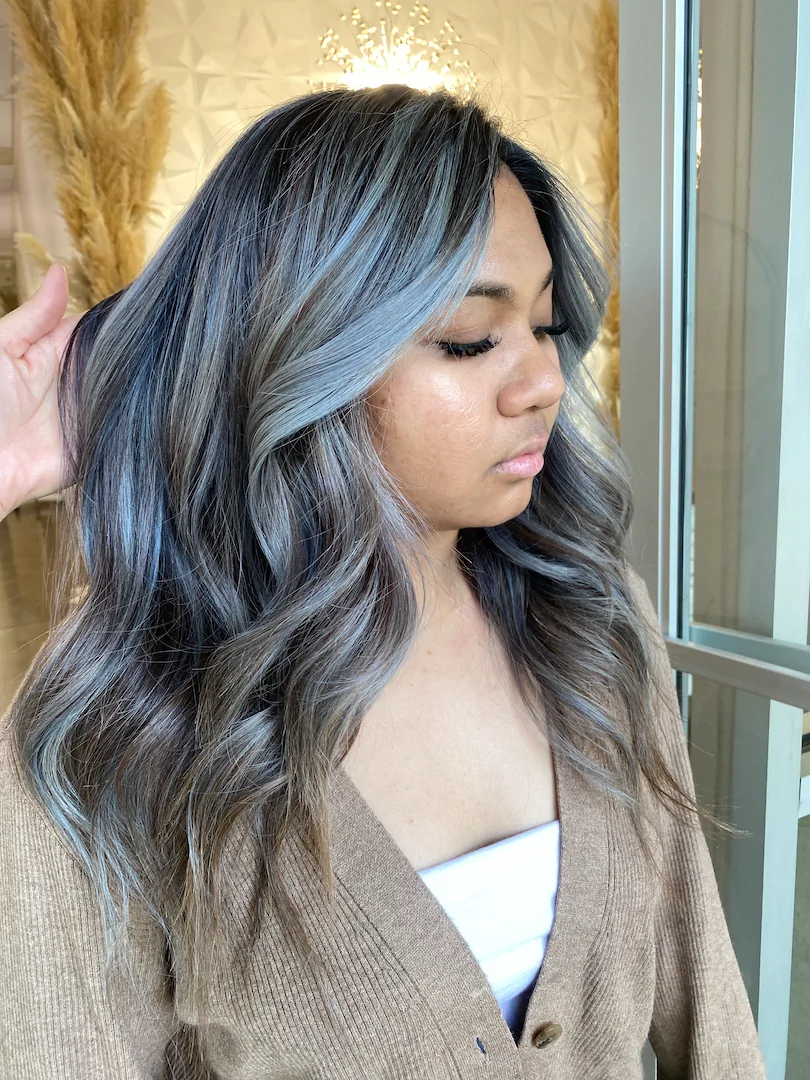
Thick hair looks amazing in photos. In real life? It can feel like a constant battle. The frizz, the weight, the “triangle head” after a blowout, the styles that look great for twenty minutes before turning into a poof. If that sounds familiar, the right haircut for thick hair can genuinely change everything.
The good news: you don’t have to sacrifice length or style to get rid of bulk. The key is knowing which techniques actually work and finding a stylist who understands how to use them.
Why Thick Hair Needs a Different Approach
Not every haircut works for thick hair. A blunt cut that looks sleek on fine hair turns into a brick on thick hair. Too many layers without the right shaping, and you end up with volume in all the wrong places.
Thick hair needs:
- Internal weight removal (not just surface thinning)
- Strategic layering that works with your natural texture
- A shape that controls where the volume lands
The goal isn’t to fight your hair. It’s to redirect it.
The Best Haircuts for Thick Hair That Actually Remove Bulk
The Textured Lob (Long Bob)
The textured lob is one of the most reliable haircuts for thick hair. Cut between the chin and collarbone, a lob removes the heavy bottom section that makes thick hair fan outward. When a stylist adds texture through the ends using point cutting or razor work, the result is soft, movable, and dramatically lighter-feeling.
It works on straight, wavy, and curly thick hair. It’s low maintenance. And it frames the face without adding width at the jaw.
Layered Haircuts with Internal Texture
Heavy, uniform layers can actually make thick hair puffier. What works better is layering from the inside out, removing bulk underneath while keeping surface movement intact.
Ask your stylist about internal layers or undercutting specific sections. This keeps the top layer looking full and healthy while the underneath is thinned and shaped. You get the illusion of volume control without losing any length on the outside.
The Shag or Modern Wolf Cut
The shag has had a serious comeback, and thick hair is exactly what it was made for. Lots of layers, curtain bangs, and texture throughout, this haircut for thick hair distributes volume across the whole head instead of letting it settle at the bottom.
The modern wolf cut puts a more edgy spin on the same concept. Both styles use a mix of short and long layers to keep thick hair from getting weighed down or boxy.
Shoulder-Length Cuts with Point-Cut Ends
Going shoulder-length is a smart move for thick hair. It removes the heavier bottom sections that contribute to a triangle silhouette, and it’s versatile enough to style straight, wavy, or curly.
The difference between a good shoulder cut and a great one for thick hair is in the finishing technique. Point-cutting the ends, rather than blunt-cutting, allows the hair to move and lie flat instead of fanning outward.
Face-Framing Layers for Long Thick Hair
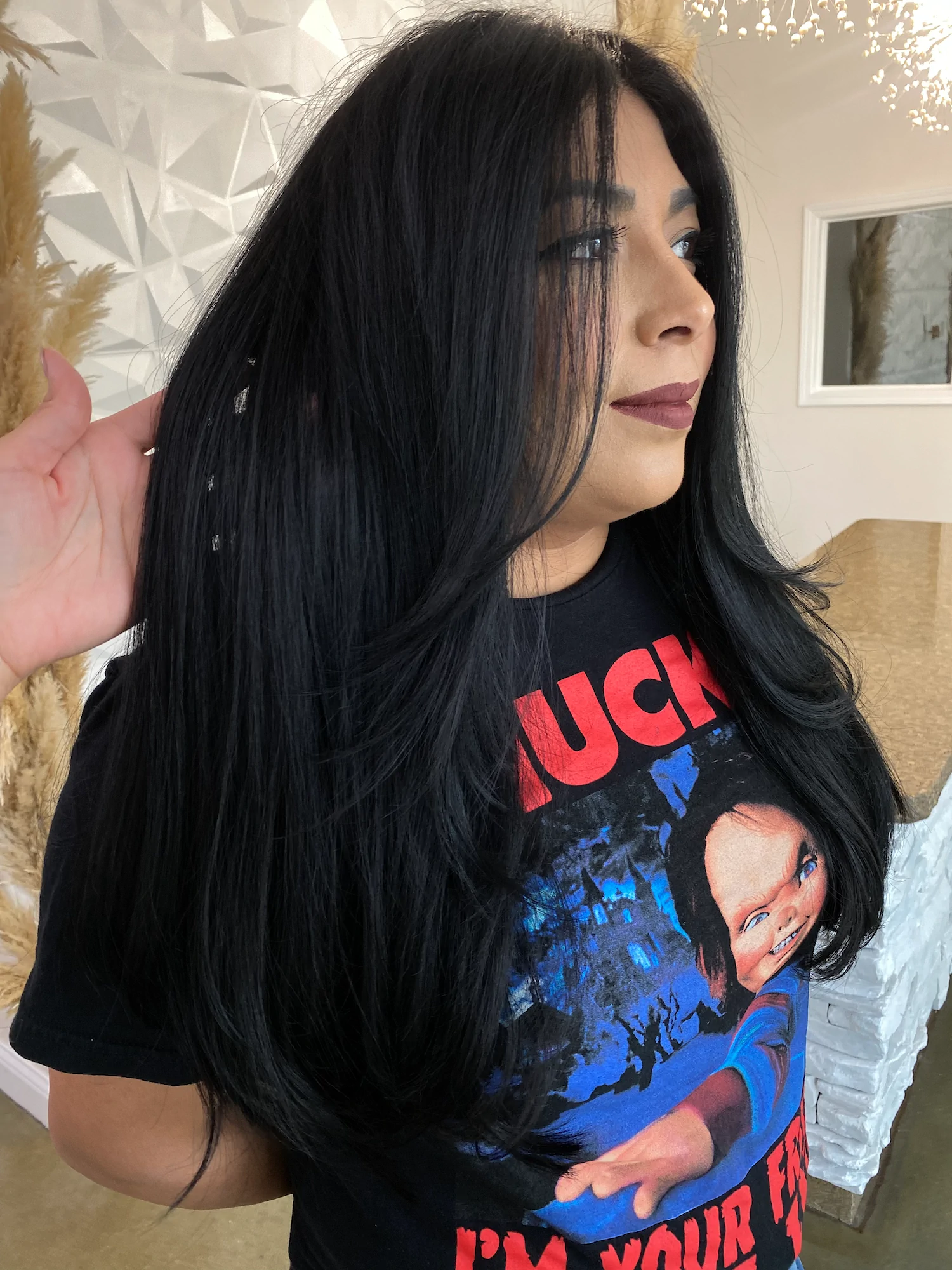
Prefer to keep your length? That’s completely fine. Long haircuts for thick hair can still manage bulk effectively with face-framing layers and internal texture work.
The key is not going layer-crazy all over the head. Instead, concentrated layers around the face and through the mid-lengths remove weight exactly where you feel it most, while the rest of the hair stays long and supported.
Techniques Your Stylist Should Be Using
The haircut itself matters, but so does how it’s executed. Here are the cutting techniques that make the biggest difference for thick hair:
- Point cutting — snipping vertically into the ends to create softness instead of a hard line
- Razor cutting — slices through the hair to reduce weight and create movement
- Slide cutting — removes bulk from the mid-lengths without shortening overall
- Undercutting — removing bulk from the layers closest to the scalp for major relief
- Thinning shears — used sparingly, specifically in the mid-shaft and ends (not roots)
If your stylist isn’t mentioning at least a couple of these during your consultation for thick hair, that’s worth bringing up. The technique matters as much as the shape.
What to Tell Your Stylist Before Your Haircut
Walk in prepared. Here’s what to communicate:
- Where the bulk bothers you most (bottom, sides, or crown)?
- Your natural texture when air-dried (straight, wavy, curly, coily)
- How much time you spend styling daily
- Whether you use heat regularly or prefer a wash-and-go routine
The more specific you are, the better your stylist can customize the cut to your actual hair and lifestyle not just a generic thick-hair formula.
How Often Should Thick Hair Be Cut?
For bulk-reduction cuts, every 8 to 12 weeks keeps the shape working as it should. Thick hair grows in fast, and the weight builds back up quickly. Regular trims maintain the point-cut texture and prevent heaviness from creeping back in.
If you’re growing your hair out, ask for a shape and texture refresh instead of a length trim. A good stylist can maintain the bulk reduction while still gaining length over time.

Ready to Get a Haircut That Actually Works for Your Hair?
At Cultivate Beauty Lounge in Fresno, our stylists specialize in cutting and shaping thick hair with techniques that go beyond a basic trim. Whether you want to go shorter, keep your length, or try something completely different, we’ll build a cut around your hair’s actual texture and your lifestyle.
Book your appointment today and find us on Google Maps Cultivate Beauty Lounge, Fresno. Come in for a consultation and leave with a cut that finally works with your hair, not against it.